


 Send Inquiry
Bearing Isolator
Price 4499.00 INR/ Number
MOQ : 1 Number
Bearing Isolator Specification
- Lubrication Type
- Oil
- Usage
- Industrial
- Material
- Stainless Steel
- Size
- Various Sizes Available
- Use
- Industrial
- Bearing Type
- Ball Bearing
Bearing Isolator Trade Information
- Minimum Order Quantity
- 1 Number
- Supply Ability
- 5000 Per Month
- Delivery Time
- 4 Days
- Main Domestic Market
- All India
Bearing Isolator About
Bearing Isolator
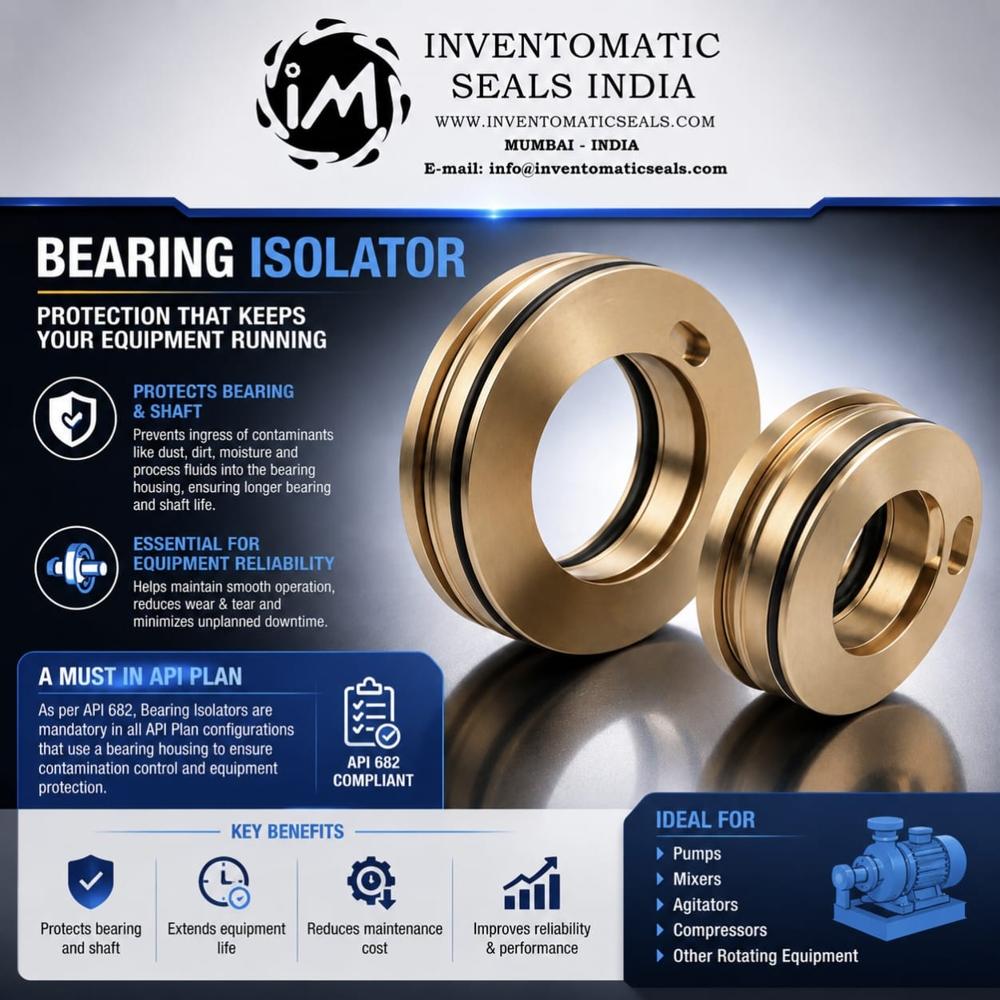
A Bearing Isolator is a non-contact sealing device designed to protect bearings by preventing the ingress of contaminants such as dust, dirt, moisture, chemicals, and other harmful particles while retaining lubrication inside the equipment. Unlike conventional contact seals, bearing isolators operate without shaft wear, making them an ideal solution for improving bearing reliability and extending equipment life.
Bearing Isolators are widely used in pumps, electric motors, gearboxes, blowers, compressors, fans, mixers, conveyors, and other rotating equipment across various industries. Their robust construction and maintenance-friendly design help reduce downtime, lower maintenance costs, and improve overall operational efficiency.
Key Features
- Non-contact design for zero shaft wear
- Prevents contamination from dust, dirt, and moisture
- Retains lubrication effectively
- Extends bearing service life
- Reduces maintenance requirements
- Suitable for high-speed rotating equipment
- Durable construction for demanding industrial environments
- Improves equipment reliability and uptime
- Available in multiple sizes and configurations
- Easy installation and replacement
Applications
- Electric Motors
- Centrifugal Pumps
- Gearboxes
- Compressors
- Blowers
- Industrial Fans
- Mixers & Agitators
- Conveyor Systems
- Pulp & Paper Industry
- Chemical Processing Plants
- Power Generation Plants
- Food & Beverage Industry
Benefits
- Increased bearing life
- Reduced maintenance costs
- Improved equipment performance
- Protection against environmental contaminants
- Lower risk of unexpected equipment failures
- Enhanced operational reliability
- Reduced lubricant consumption
- Increased equipment uptime
Typical Materials of Construction
Metal Components
- Stainless Steel 304
- Stainless Steel 316
- Bronze
- Aluminum
- Special Alloys (On Request)
O-Ring Materials
- Viton (FKM)
- Nitrile (NBR)
- EPDM
- PTFE Encapsulated O-Rings
- FFKM (For Critical Applications)
Frequently Asked Questions (FAQs)
What is a Bearing Isolator?
A Bearing Isolator is a non-contact sealing device designed to protect bearings from contamination while retaining lubrication within rotating equipment.
How does a Bearing Isolator work?
A Bearing Isolator creates a labyrinth-style sealing path that blocks contaminants from entering the bearing housing while allowing the equipment shaft to rotate freely without contact.
What is the difference between a Bearing Isolator and an Oil Seal?
Traditional oil seals use contact lips that wear over time. Bearing Isolators use a non-contact design that eliminates shaft wear and generally provides longer service life and better protection.
Where are Bearing Isolators commonly used?
They are commonly installed in:
- Electric Motors
- Pumps
- Gearboxes
- Compressors
- Fans
- Blowers
- Mixers
- Conveyor Systems
What are the advantages of using a Bearing Isolator?
Key advantages include:
- Longer bearing life
- Reduced maintenance
- Improved lubrication retention
- Better contamination protection
- Reduced equipment downtime
Can Bearing Isolators prevent water ingress?
Yes. Properly selected Bearing Isolators are highly effective in preventing moisture and water contamination in many industrial environments.
Are Bearing Isolators suitable for dusty environments?
Yes. They are specifically designed to protect bearings from dust, dirt, powder, and airborne contaminants.
Can Bearing Isolators be used in high-speed applications?
Yes. Bearing Isolators are widely used in high-speed rotating equipment due to their non-contact design.
What materials are commonly used in Bearing Isolators?
Common materials include:
- SS 304
- SS 316
- Bronze
- Aluminum
- Specialty alloys for corrosive environments
Are Bearing Isolators suitable for chemical industries?
Yes. When manufactured with corrosion-resistant materials, Bearing Isolators perform effectively in chemical and petrochemical environments.
Do Bearing Isolators require lubrication?
Bearing Isolators themselves generally do not require lubrication. Their primary function is to retain existing lubrication and protect bearings from contamination.
How long does a Bearing Isolator last?
Under proper operating conditions, Bearing Isolators can provide significantly longer service life than conventional contact seals due to their wear-free design.
Can Bearing Isolators be customized?
Yes. They can be manufactured according to shaft size, housing dimensions, operating conditions, and industry-specific requirements.
What causes bearing failures even when seals are installed?
Common causes include:
- Water ingress
- Dust contamination
- Lubrication failure
- Improper installation
- Excessive vibration
- Misalignment
A properly selected Bearing Isolator helps minimize many of these risks.
How do I select the right Bearing Isolator?
Selection depends on:
- Shaft diameter
- Housing dimensions
- Equipment type
- Operating speed (RPM)
- Temperature
- Lubrication method
- Environmental conditions
Can Bearing Isolators reduce maintenance costs?
Yes. By protecting bearings and retaining lubrication, Bearing Isolators help reduce bearing replacements, maintenance intervals, and unexpected shutdowns.
Which industries commonly use Bearing Isolators?
- Chemical Industry
- Pharmaceutical Industry
- Power Plants
- Cement Industry
- Steel Plants
- Paper Mills
- Food Processing Industry
- Water Treatment Plants
- Mining Industry
- Petrochemical Industry
Why should I choose a Bearing Isolator over a conventional seal?
Bearing Isolators offer superior contamination protection, longer service life, reduced shaft wear, lower maintenance costs, and improved equipment reliability compared to conventional contact seals.
Need Help Selecting the Right Bearing Isolator?
Our technical team can help you choose the most suitable Bearing Isolator for your application and operating conditions.
contact us at info@inventomaticseals.com


Tell us about your requirement

Price:
Quantity
Select Unit
- 50
- 100
- 200
- 250
- 500
- 1000+
Additional detail
Mobile number
Email


Contact Info

- Plot No 4, Western Park, Kashimira Mira Road East Thane,Mumbai - 401107, Maharashtra, India
- Phone : 07971671097
Inventomatic Seals India
GST : 27BJFPP0359C1ZD

- Mr Muzammil (Manager)
- Mobile : 07971671097
- Send Inquiry
 Send Inquiry

Inventomatic Seals India
All Rights Reserved.(Terms of Use)
Developed and Managed by Infocom Network Private Limited.
Developed and Managed by Infocom Network Private Limited.


 English
 Spanish
 French
 German
 Italian
 Chinese (Simplified)
 Japanese
 Korean
 Arabic
 Portuguese